

Does this sound familiar? You're in the kitchen after a long day at work, wanting to quickly sauté some vegetables or put a rösti in the pan – and suddenly that question pops up again: Which fat is actually the best choice for this? Between olive oil, butter, ghee, coconut oil, and countless dietary tips, it's easy to lose track.
That's exactly what this article is about: not dietary dogmas, but practical, honest guidance for everyday life. You'll learn why ghee is so popular for frying, why coconut oil is heat-stable, and when each fat truly makes sense in your kitchen. If you enjoy cooking, want to eat healthier, or simply want to consciously upgrade your frying fat shelf, you're in the right place.

What's the actual problem with frying?
The most important keyword is the smoke point. This refers to the temperature at which a fat begins to smoke and chemically changes. If an unsuitable fat is heated too much, it oxidizes more easily, loses quality, and undesirable breakdown products can form.
This happens more often in everyday life than you might think. Many people fry with fats that seem "healthy" but are not ideal for high temperatures. Cold-pressed, delicate oils are wonderful on salads or steamed vegetables, but are often out of place in a hot pan. So, if you want to know how to fry healthily – which fat to use, you should look not just at marketing, but primarily at heat stability and intended use.
Why traditional solutions often lead to frustration
Butter tastes fine, but it burns relatively quickly because, in addition to fat, it also contains water, milk sugar, and protein. You probably know the result: the pan smokes, the taste turns bitter, and dinner starts with stress instead of enjoyment.
Many virgin vegetable oils also cause confusion. They are rightly considered valuable, especially due to their unsaturated fatty acids, but are often better suited for cold or only gently heated dishes than for searing. This is precisely why so many people feel uncertain: "healthy" does not automatically mean "pan-friendly."

What makes a fat heat-stable?
A fat remains more stable the better its structure can handle heat. Saturated fats are generally more robust than very delicate, polyunsaturated fats. That's why ghee and coconut oil are so popular in many kitchens – not despite, but precisely because of their composition.
Then there's the manufacturing process. Ghee is clarified butter, from which water and milk protein are removed, making it significantly more heat-resistant than regular butter. Coconut oil consists largely of saturated fatty acids and is therefore considered particularly oxidation-stable. For everyday practice, this means: these fats remain calmer and more reliable in the pan.
Frying with ghee: Why it has so many fans
If you're wondering whether you should fry with ghee, the short answer is: very often, yes. Ghee has a high smoke point of around 250 degrees Celsius and is therefore excellent for searing, roasting, and even deep-frying. Unlike butter, it burns significantly less quickly and at the same time brings a pleasant buttery, slightly nutty aroma.
This is particularly practical in everyday life. A vegetable stir-fry after work, a rösti on Sunday morning, or a simple lentil dish with spices can be prepared easily and aromatically with ghee. In Ayurveda, ghee also holds a special significance and is traditionally used as a valuable cooking fat. So, it combines heat stability with flavor and a certain feel-good factor in the kitchen.

Heat-stable coconut oil: When it makes particular sense
Coconut oil is also heat-stable and is well-suited for frying, baking, and sautéing. Depending on the product, the smoke point is around 185 to 205 degrees Celsius, and some sources even cite up to about 200 degrees. This makes it perfectly suitable for many typical everyday pan dishes.
Coconut oil is particularly interesting if you cook plant-based or are looking for an alternative to animal fats. Depending on the variety, it either has a slight coconut aroma or is available odorless. This can be very suitable for Asian vegetable stir-fries, curries, sweet breakfast pans, or mild children's dishes. However, if you are looking for a purely neutral fat for all types of Swiss everyday cooking, you often prefer ghee or a neutral coconut oil variant.

Other fats briefly categorized
Not every fat needs to disappear from the kitchen. It's mainly about when you use which one. Cold-pressed olive oil, flaxseed oil, or walnut oil make their grand entrance with cold dishes such as salads, bowls, or over already cooked vegetables. There, they provide flavor and valuable fatty acids without being unnecessarily heated.
Butter can still be wonderful for gentle sautéing or for finishing at the end, if you have the temperature under control. However, for high heat, ghee and coconut oil are usually the more relaxed choice. That's often the best solution: not a single "miracle fat," but a small, well-thought-out fat shelf for different situations.
Concrete product solutions from the mana-shop
If you want to consciously simplify your frying fat shelf, a few well-chosen products are often enough. In mana-shop.ch, these options are particularly suitable for the topic:
1. Classic Organic Ghee
An ideal all-rounder for those who regularly cook in a pan. It's suitable for vegetable stir-fries, rösti, egg dishes, or for sautéing spices at the beginning of a curry.
→ Discover ORGANIC GHEE in the shop
2. Spiced Ghee
Perfect when you're short on time and want to add more flavour directly to the pan with a spoon. Especially delicious for roasted vegetables, rice dishes, or a quick breakfast skillet.
→ Discover SPICED GHEE in the shop
3. Virgin Coconut Oil
For those who like to cook plant-based or enjoy a mild exotic accent. Ideal for curries, wok vegetables, banana pancakes, or sweet breakfast recipes.
→ Discover VIRGIN COCONUT OIL in the shop
4. Odourless Coconut Oil
If you appreciate heat stability but don't want a coconut flavour in your dish, this variant is particularly practical. Good for potato stir-fries, children's meals, or more neutral everyday dishes.
→ Discover ODOURLESS COCONUT OIL in the shop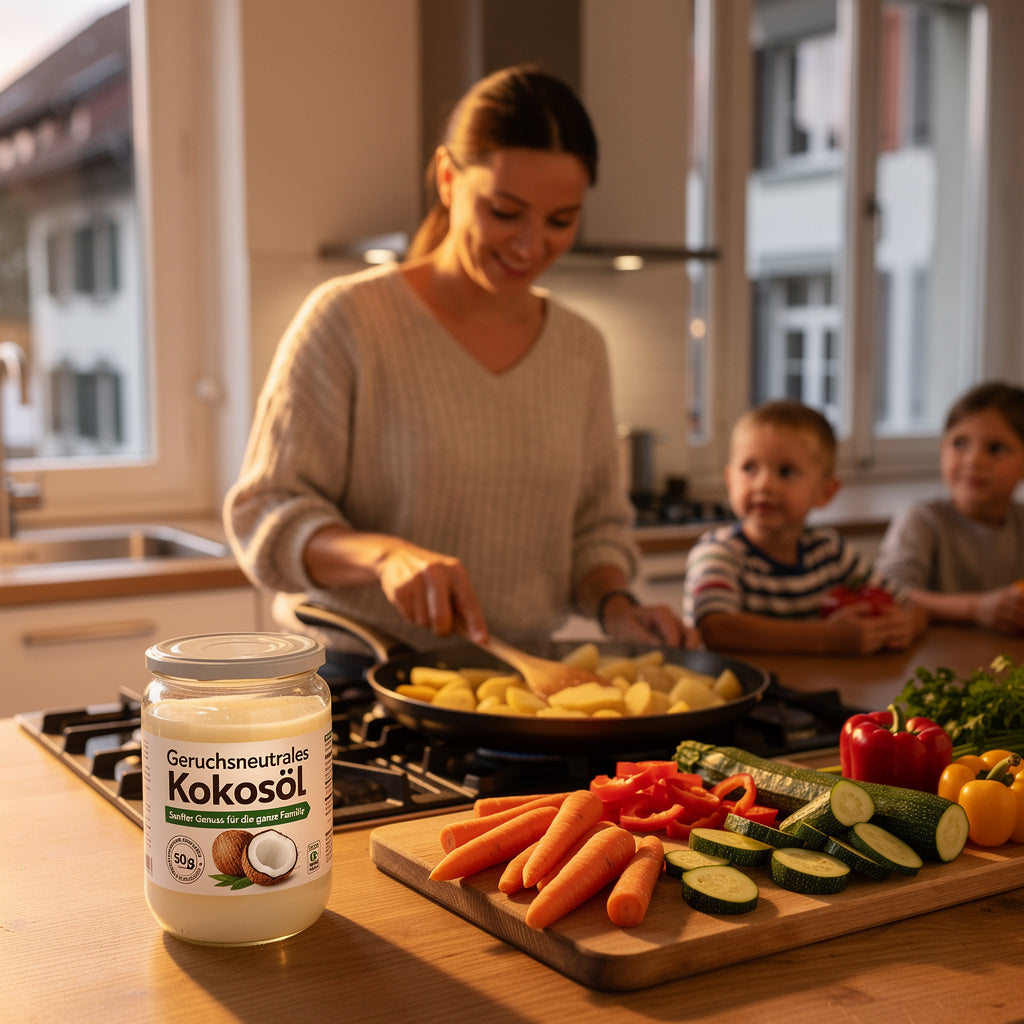
5. Ghee for Ritual Kitchen
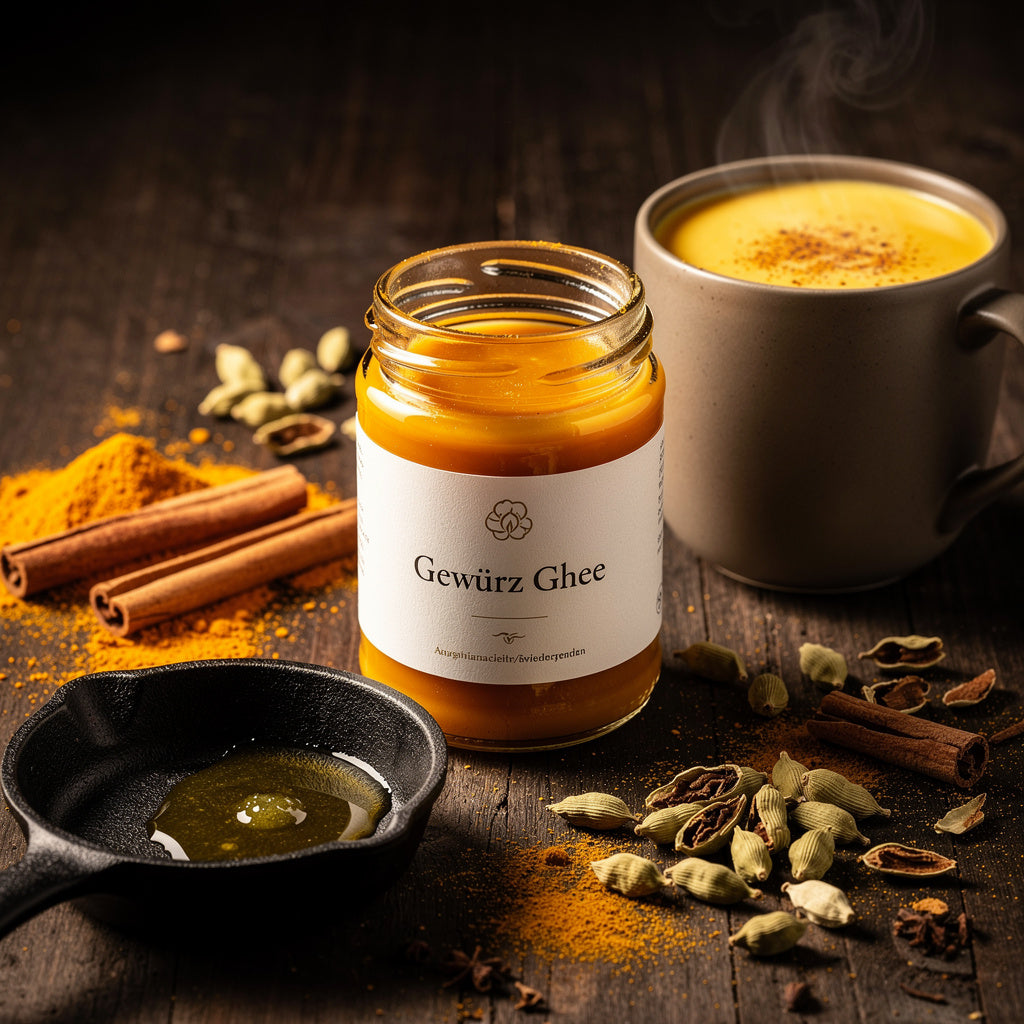
Beyond the frying pan, ghee is exciting: for Golden Milk in the evening or a spoonful over freshly cooked rice. Especially in Ayurvedic cuisine, it's often used not just for frying, but also for conscious refinement.
→ Discover AYURVEDA GHEE in the shop
Simple Routine: Which Fat When?
To keep things simple in everyday life, you can follow this mini-routine:
-
For high heat and searing: Ghee.
-
For medium heat, curries, and plant-based cooking: Coconut oil.
-
For cold dishes and finishing: Olive oil or other delicate oils only after cooking.
-
For quick flavour without much effort: Spiced Ghee.
-
For gentle evening rituals: A little ghee in Golden Milk or warm spiced drinks.
Dos & Don’ts
-
Do: Heat the pan first, then add the fat.
-
Do: Use moderate amounts, a teaspoon is often enough.
-
Don’t: Sharply heat delicate, cold-pressed oils.
-
Don’t: Let fat smoke, even if it's heat-stable.
Realistic Expectations & Safety
As helpful as ghee and coconut oil are: they remain fats and therefore energy-rich foods. More is not automatically better. It's not about eating as much fat as possible, but about using the right fat appropriately.
Ghee is often better tolerated by people with lactose intolerance than butter, because water, milk sugar, and protein are largely removed during clarification. However, caution is advised for a true milk allergy. Coconut oil is plant-based and attractive for vegan kitchens, but depending on the variety, it has its own flavour that one must like.
Why products from mana-shop.ch in particular?
At mana-shop.ch, it's not just about any fat on the shelf. Quality, careful selection, and practical products that truly fit into a conscious kitchen are crucial. Especially with ghee and coconut oil, processing makes a difference - both in taste and application.
In addition, there's a holistic perspective. Those interested in Ayurveda, natural nutrition, and conscious kitchen routines usually don't want ten complicated rules, but simple products that work. That's exactly why ghee and coconut oil are so popular: little drama, much benefit.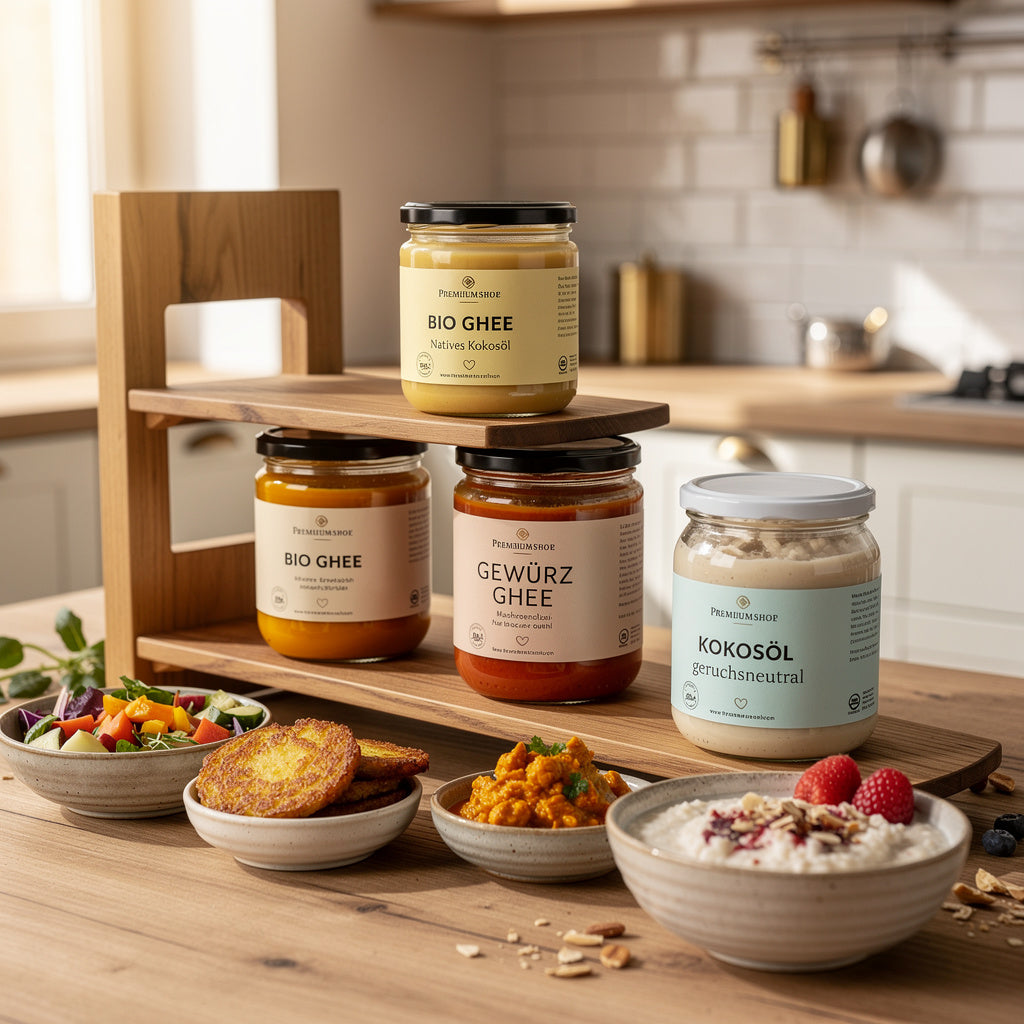
Upgrade for your kitchen
You don't have to change everything at once. Often, it's enough to buy good ghee or high-quality coconut oil on your next shopping trip and cook consciously with it for a few weeks. You'll quickly notice which fat suits your habits, taste, and daily life.
Discover our selection of ghee, coconut oil & Ayurvedic kitchen products now and upgrade your frying fat shelf step by step.
→ Discover OILS & FATS category in the shop


